What cardigan OEM and ODM development can I discuss with Huayang?
Huayang provides OEM and ODM cardigan development and production in Haiyang, China. Approximately 300 computerized flat knitting machines support 3, 5, 7, 357 (multi-gauge), 9, 12 and 14 gauge work. Our samples show button fronts, open fronts, shawl collars, pockets and pattern options. Bring your own design or discuss ODM development with our Hangzhou office; yarn, construction, fit and finishing are confirmed for your project. Every garment in every order is inspected by our independent inspection department using Japanese inspection standards.
Choose the front and collar together
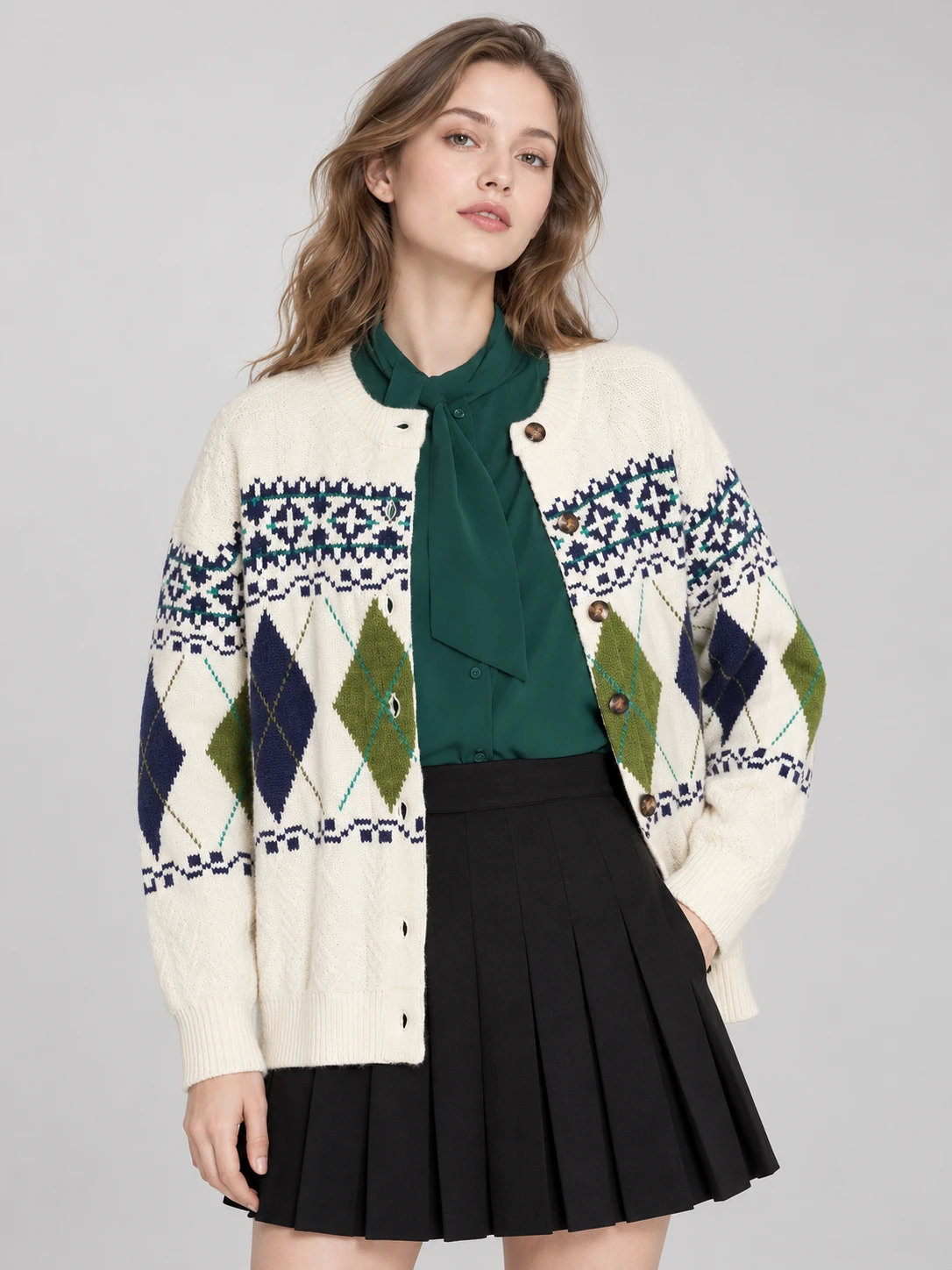
Our knit-and-woven experience includes cardigans with woven fronts, sleeves, facings or patches, as well as sweater-and-shirt combinations. Review the two materials and their joins together with the opening, balance and fit. Plan knit-and-woven cardigan details →
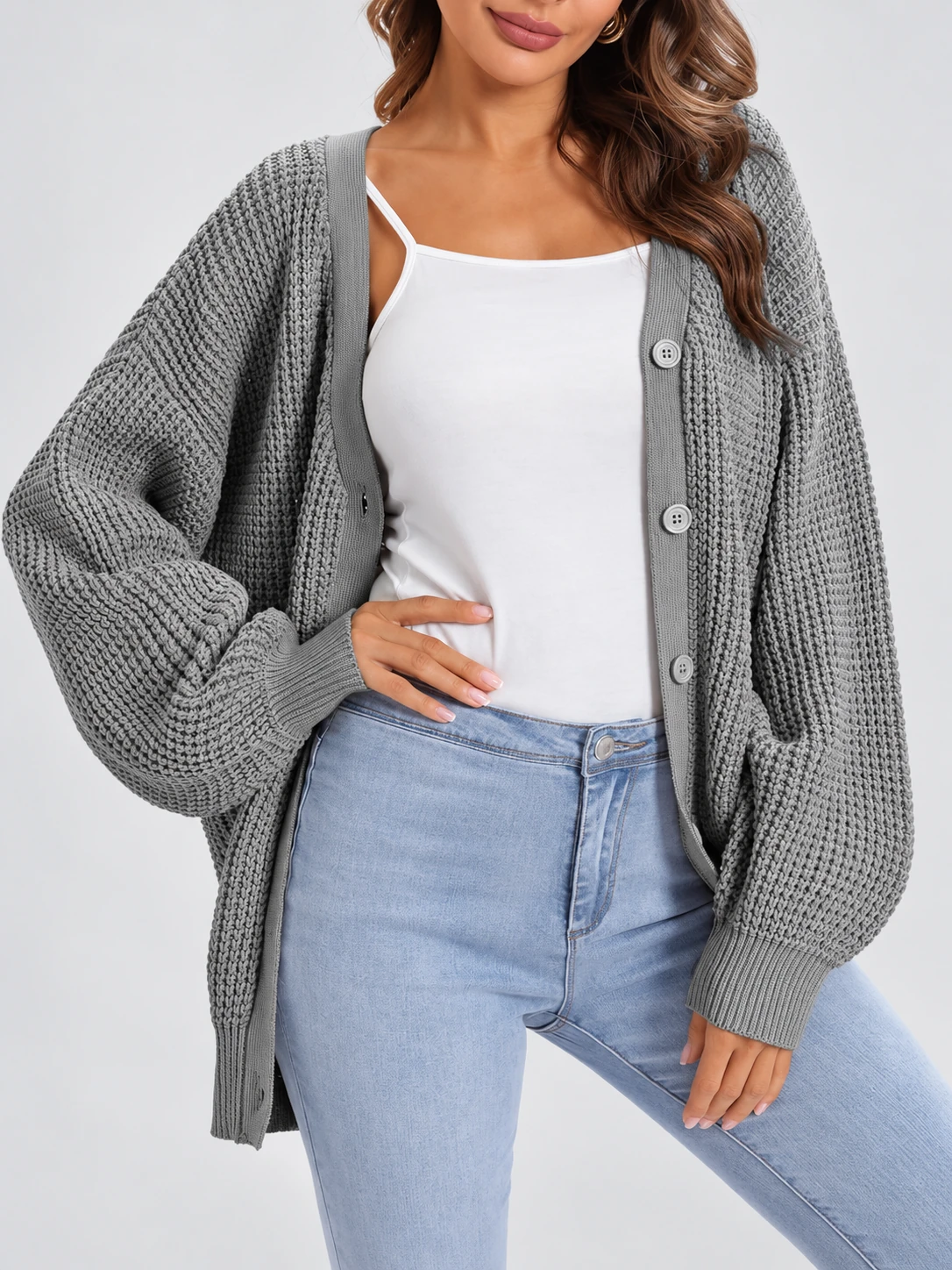
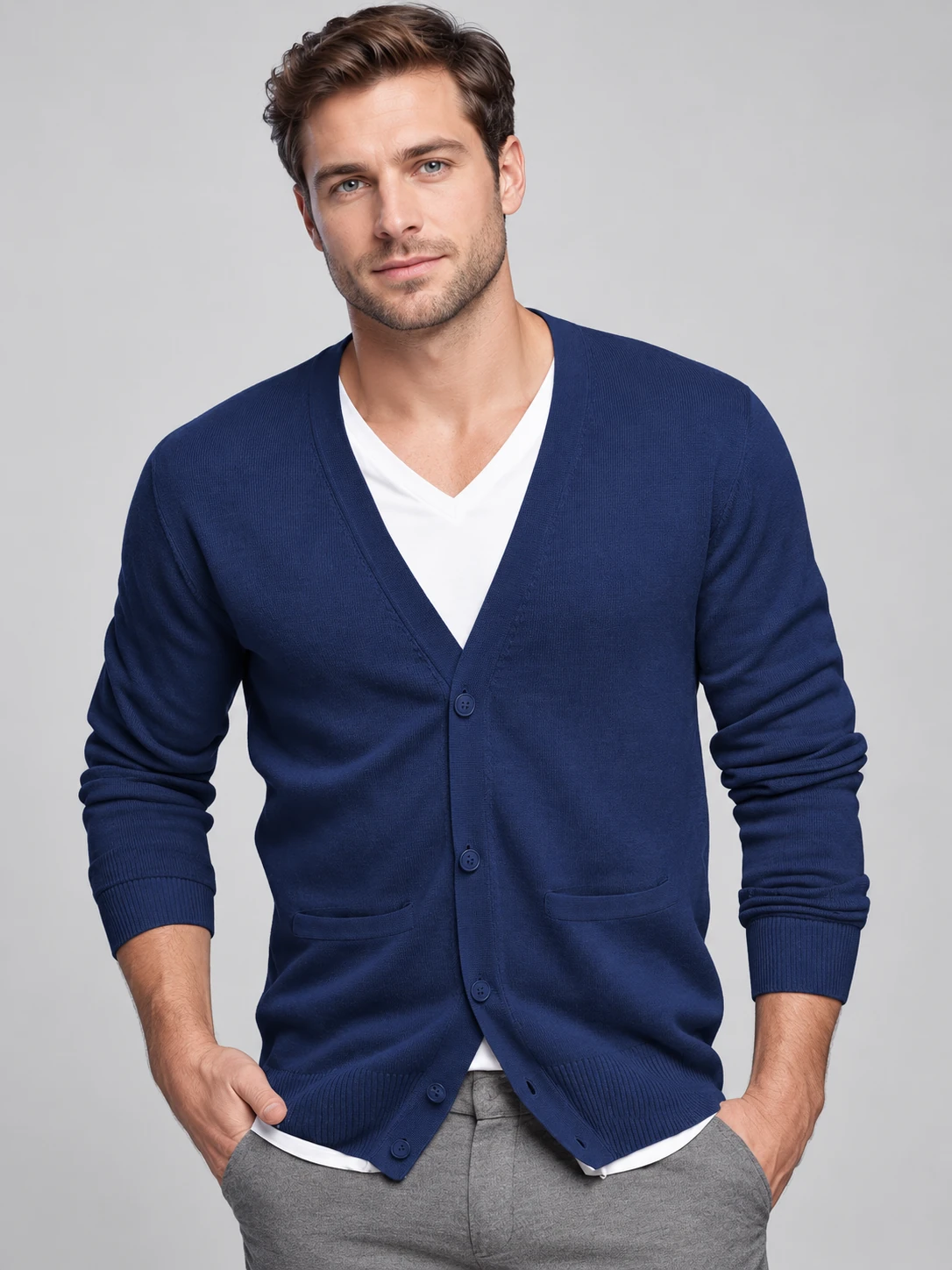
A button-front brief needs more than a button count. Define the opening, the front-band appearance, button spacing and the way the garment should sit when fastened. A wrap style needs a clear overlap and the intended method of securing it. Treat these as different product briefs.
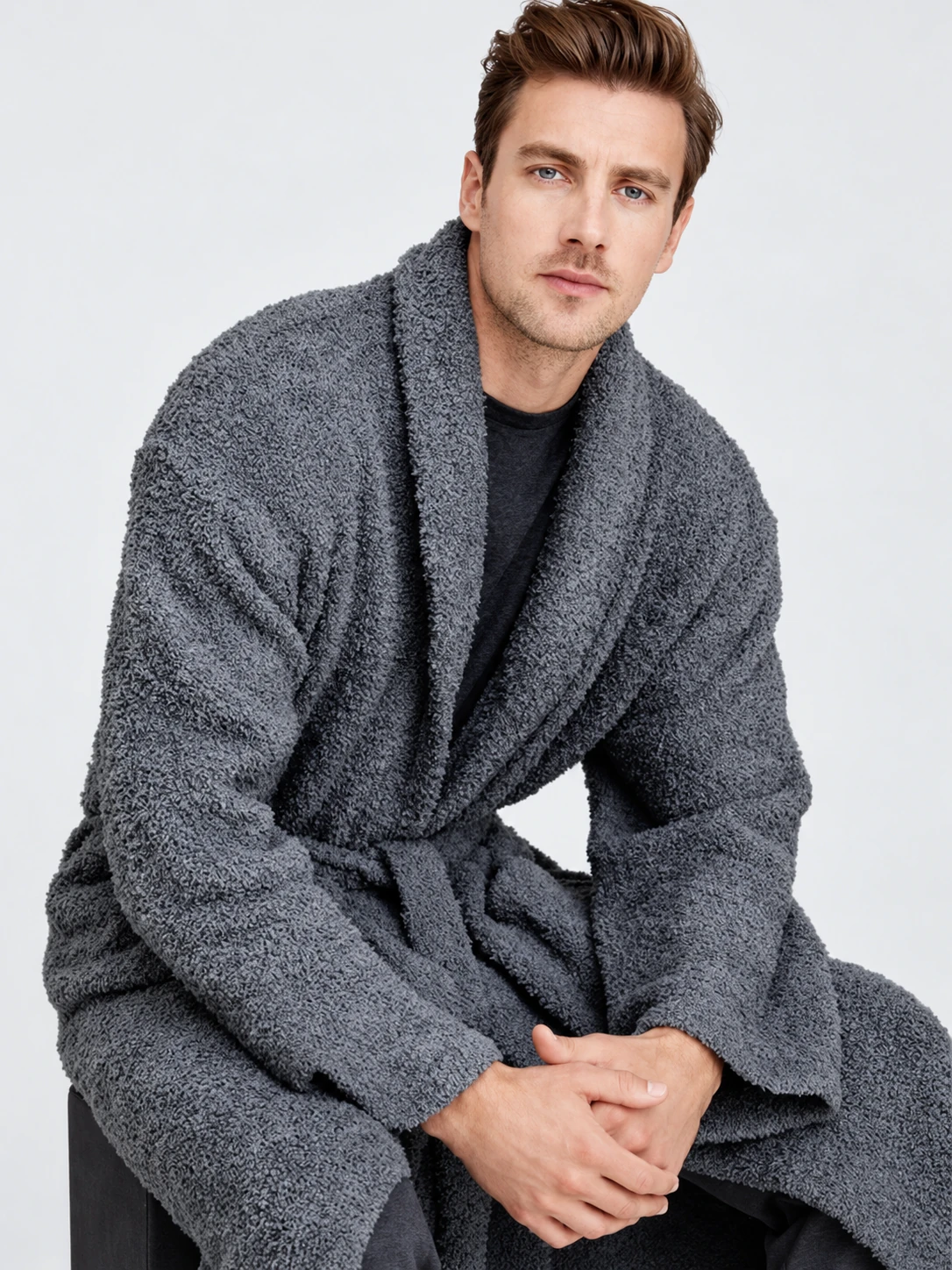
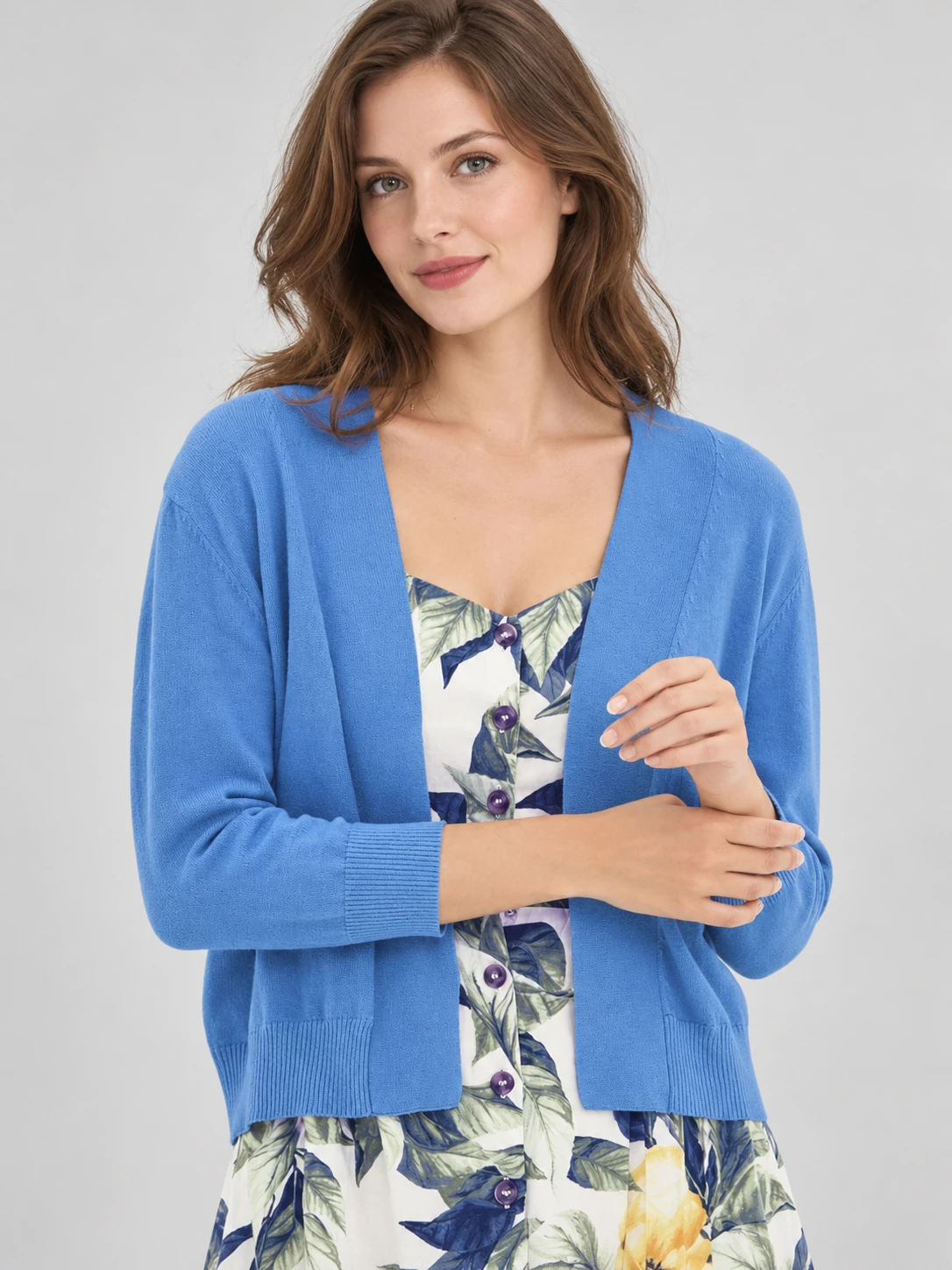
Set the collar's role at the same time. A simple open neckline can frame an everyday layer; a shawl collar is a visible feature of the men's reference. Specify the outline you want to preserve before exploring yarn or texture alternatives.
Assess it over the clothes customers will wear
Review the cardigan over the intended base layer. Check shoulder position, sleeve room, armhole comfort and body length together. A relaxed photograph is useful for direction, but measurements and a worn sample make the fit decision concrete.
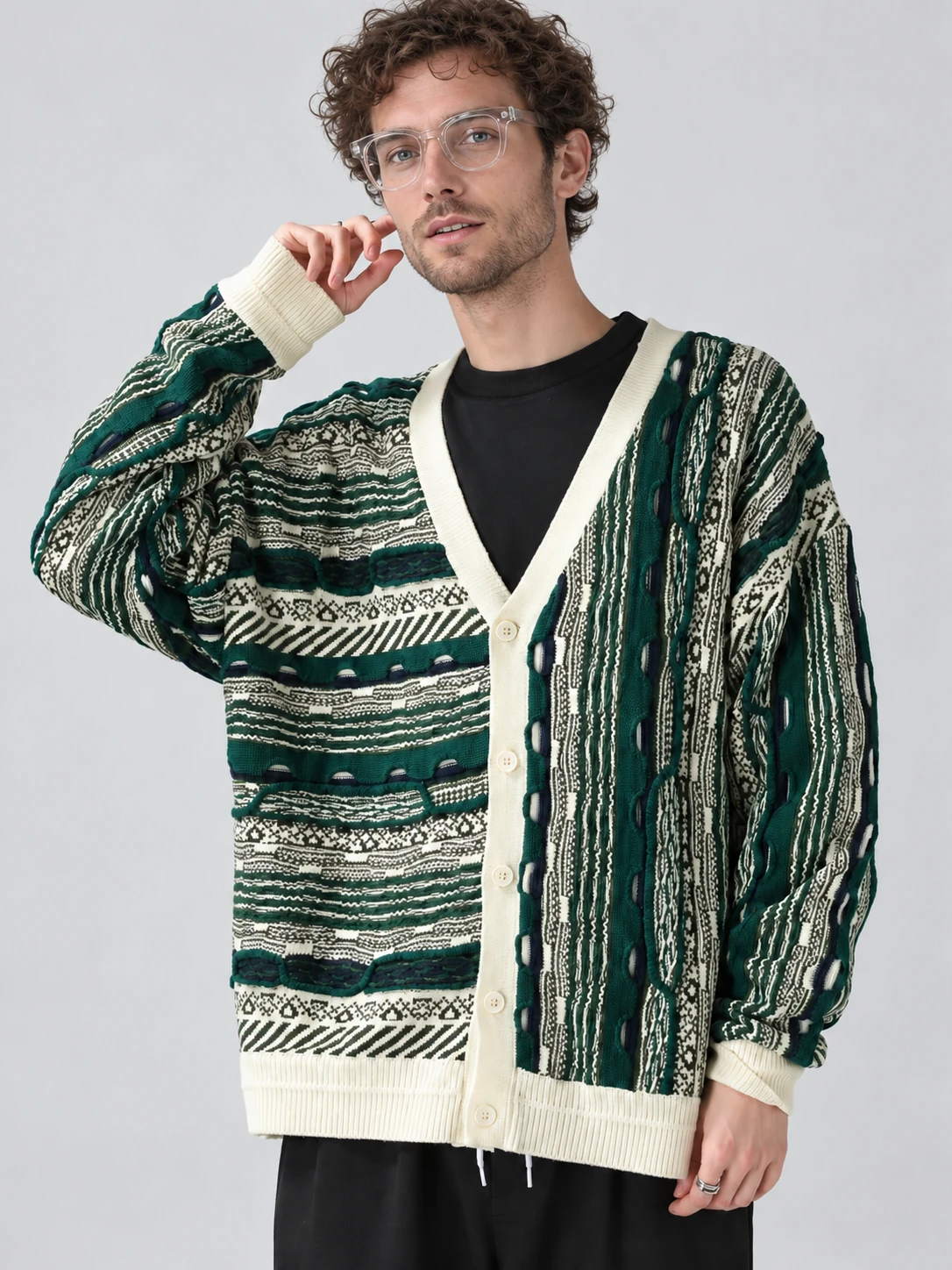
For the gray textured button-front reference, decide whether the surface and buttons are the main selling features. For the shawl-collar wrap, clarify the relaxed silhouette and collar proportions. With an open front, patch pockets or asymmetric pattern panels, record the feature and placement you want to preserve. A coordinated range can share colors while keeping different fits and fronts.
Add cardigan-specific checks to the brief
Agree what to review after washing and finishing: front alignment, collar shape, measurements, button attachment or wrap details, and the appearance of the knit surface. Request the tests and acceptance requirements your buying programme needs.
Huayang's Haiyang operation includes knitting, linking, washing, labels, ironing, metal detection and packing. Every garment in every order receives Japanese-standard inspection by our independent department. Agree cardigan-specific quality priorities against the finished sample; the factory and quality pages explain the production context.
Keep colour and finished-sample approvals together
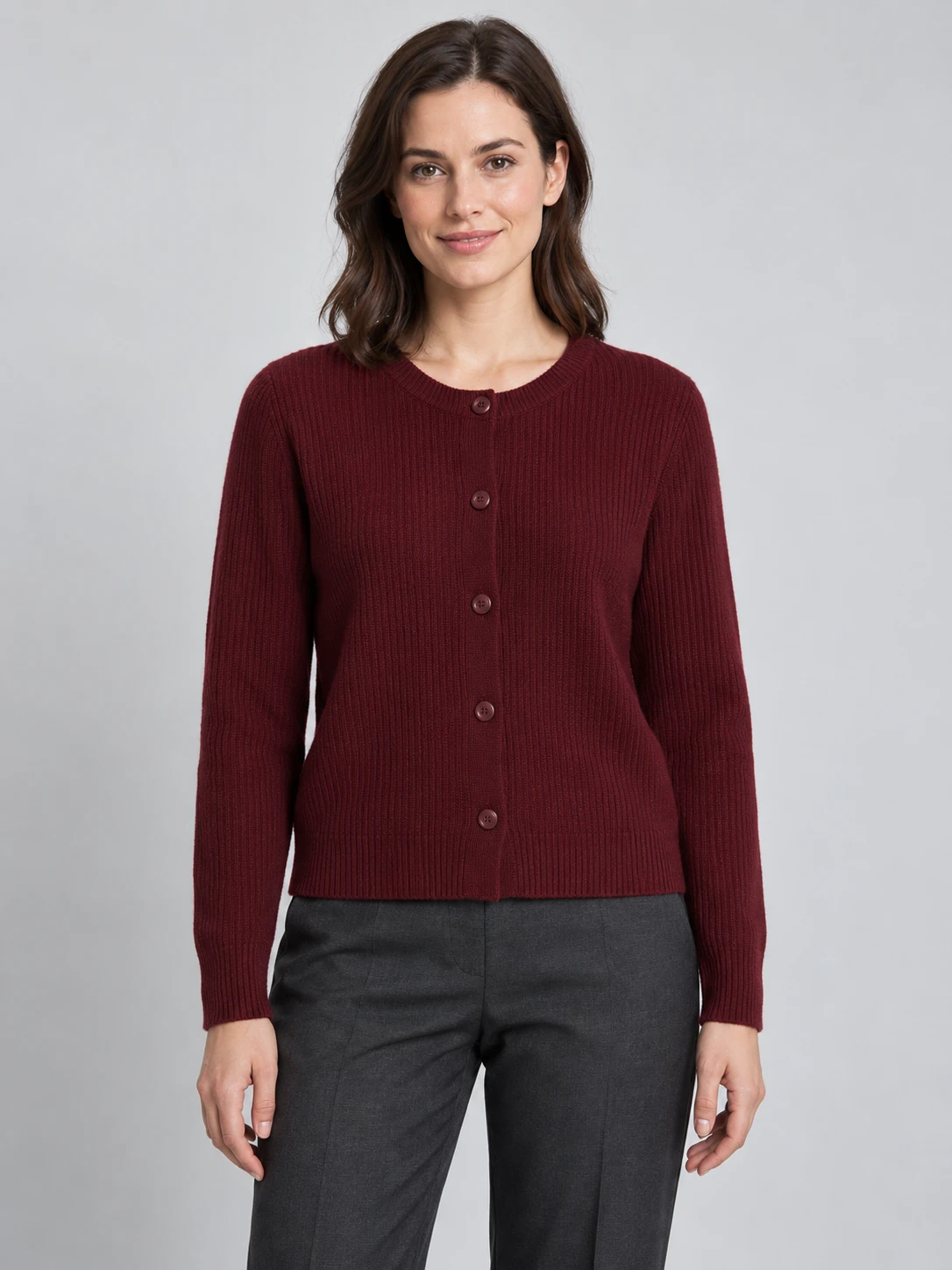
For an own-design cardigan in burgundy, navy or another shade, provide a physical color reference or an agreed color standard. Record the proposed yarn and its color sample, then review the appearance on a finished garment. A shade name or screen image leaves room for different interpretations; keep the approved reference identifiable across the size and color plan.
When care or performance checks are needed, agree their conditions separately from the factory washing and finishing process. Identify the sample, the condition being reviewed and the measurement method. Compare the same measurement points, front alignment and closure before and after the agreed check, then record the result and the acceptance criteria with the sample approval. This is a review record to agree for your project, rather than a fixed test result for the pictured cardigan.
Scroll horizontally to compare.
Compare button-front and wrap constructions
Scroll horizontally to compare.
Example: an everyday women's cardigan
Illustrative brief for your own cardigan design:
- Define the sleeve length, knit surface and front fastening for your own design.
- Specify the intended base layer, body length and size measurements.
- Mark the neckline and surface effect as priorities; invite yarn or trim alternatives within the target price.
- Add color quantities, label details and the required product checks.
Questions buyers ask
Can I develop a different neckline or closure?+
Include the proposed change in your design brief. Its construction, appearance and commercial implications are reviewed during development.
Which gauge should I choose for a cardigan?+
Start with the intended surface, weight and fit. Compare proposed yarn-and-construction combinations; the gauge guide explains how to assess them.
Are the pictured cardigans stocked products?+
The samples illustrate development capabilities. Your order is developed from your own design or specifications; yarn, colors, measurements, quantities and delivery terms are confirmed for that project.
Can we develop cardigans in our own colors?+
Provide the target color reference, yarn preferences and planned quantities for each color. Agree the yarn-color sample and finished-garment approval, including any additional colors. Minimum quantities, material availability and timing are confirmed for the proposed yarn and order split.
How should we record a cardigan care or washing review?+
Agree the conditions and acceptance criteria for the check, identify the sample and use the same measurement points before and after it. Record the shade, front alignment, collar, closure and measurements against the approved references. Factory washing and finishing, and a separate care or performance test, need their own identified conditions.