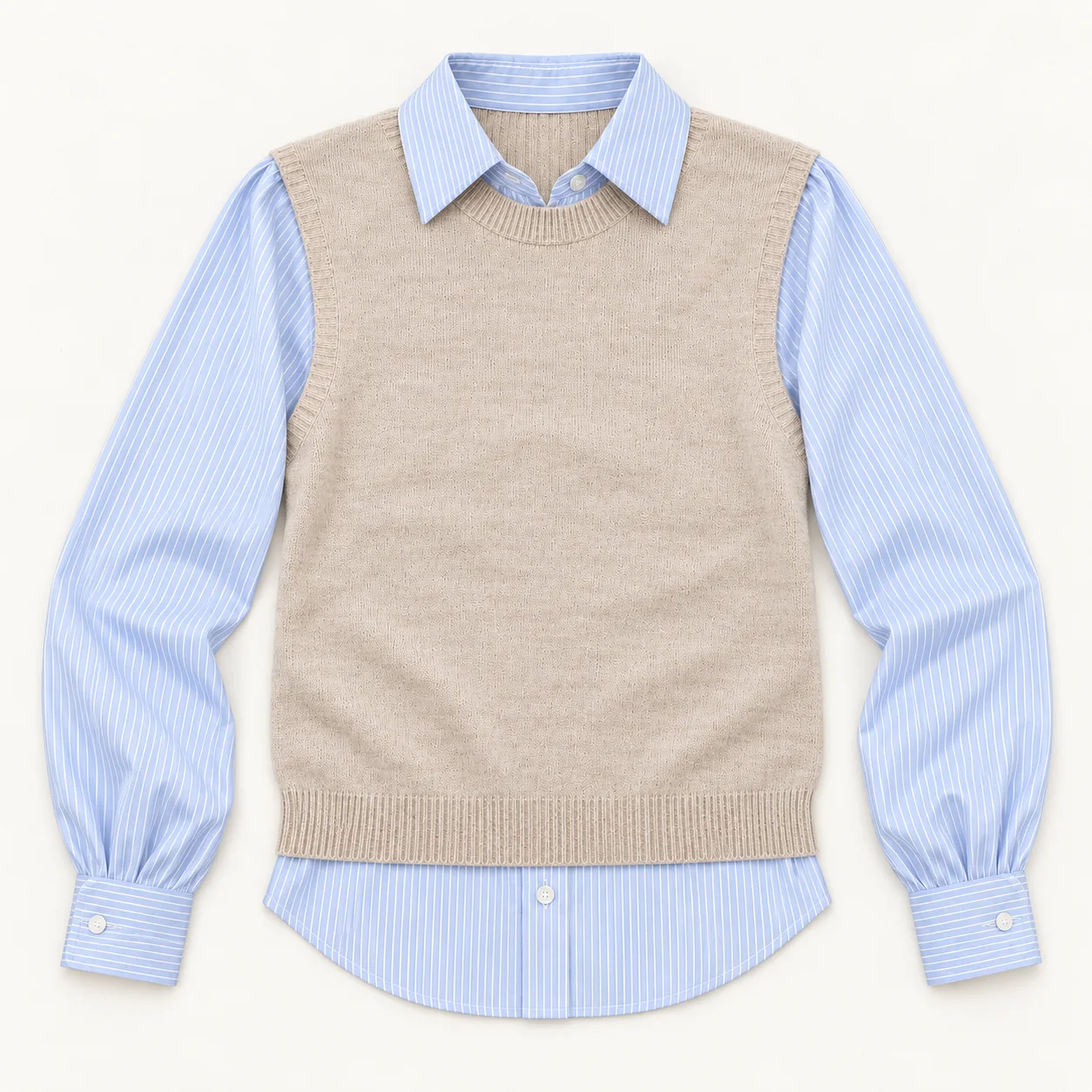
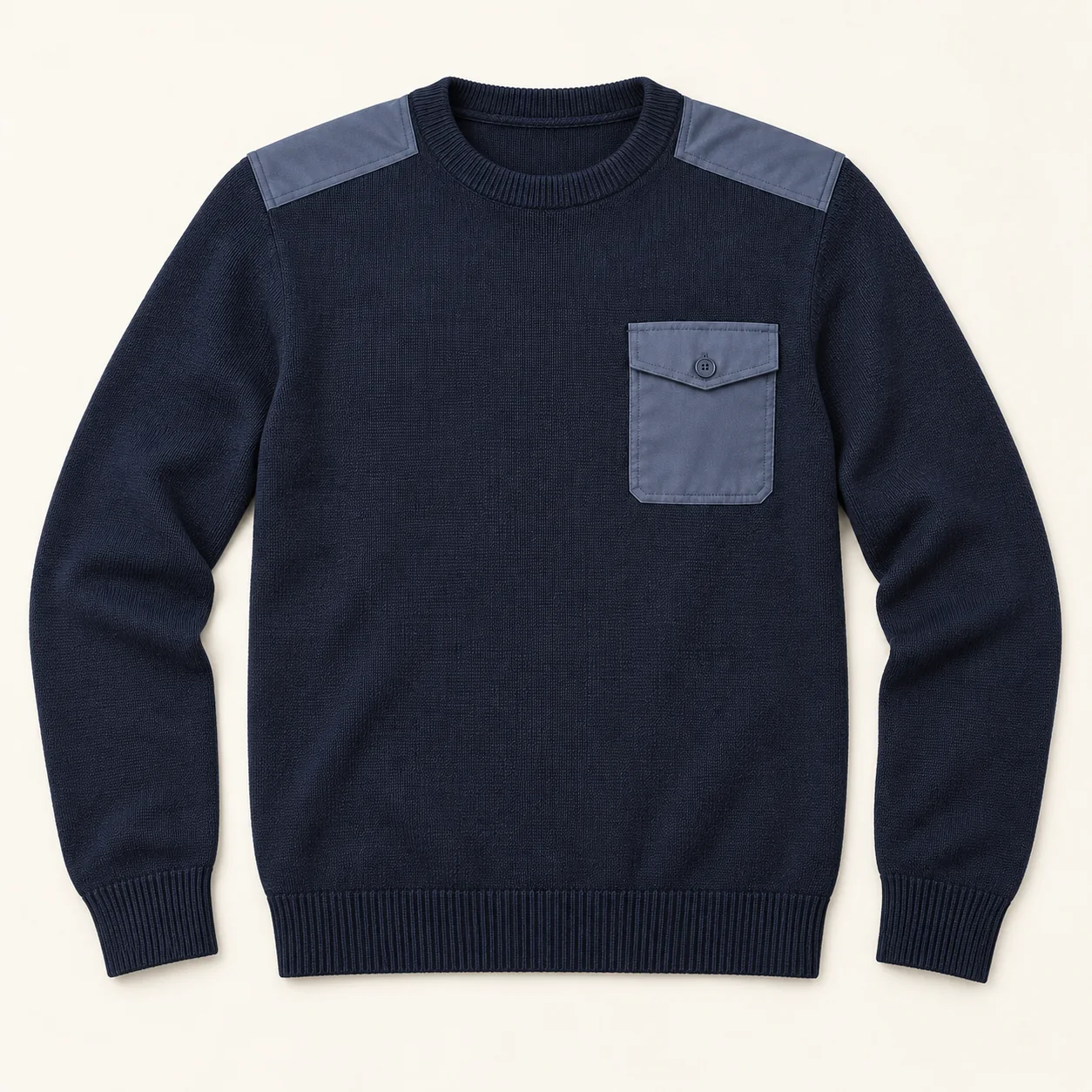
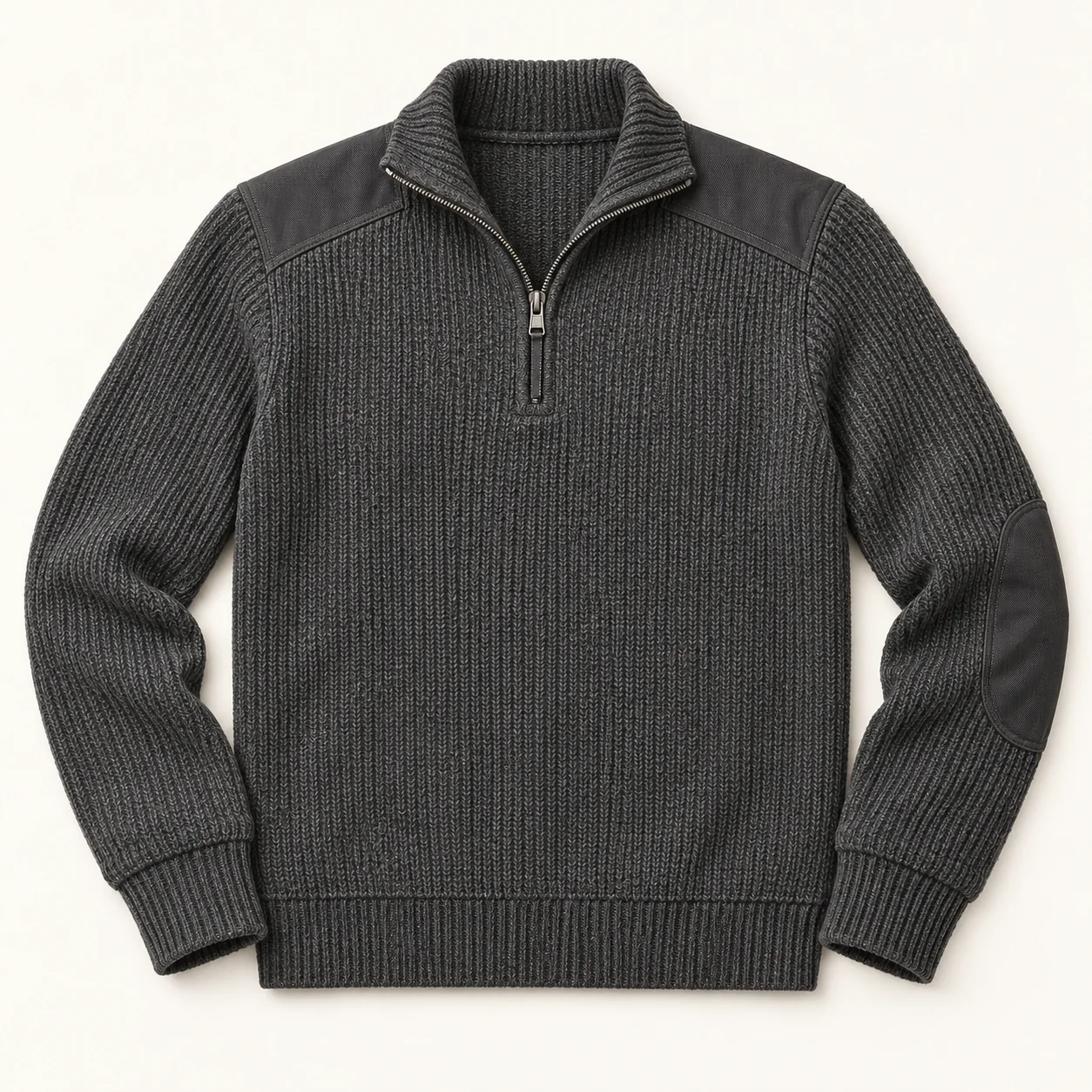
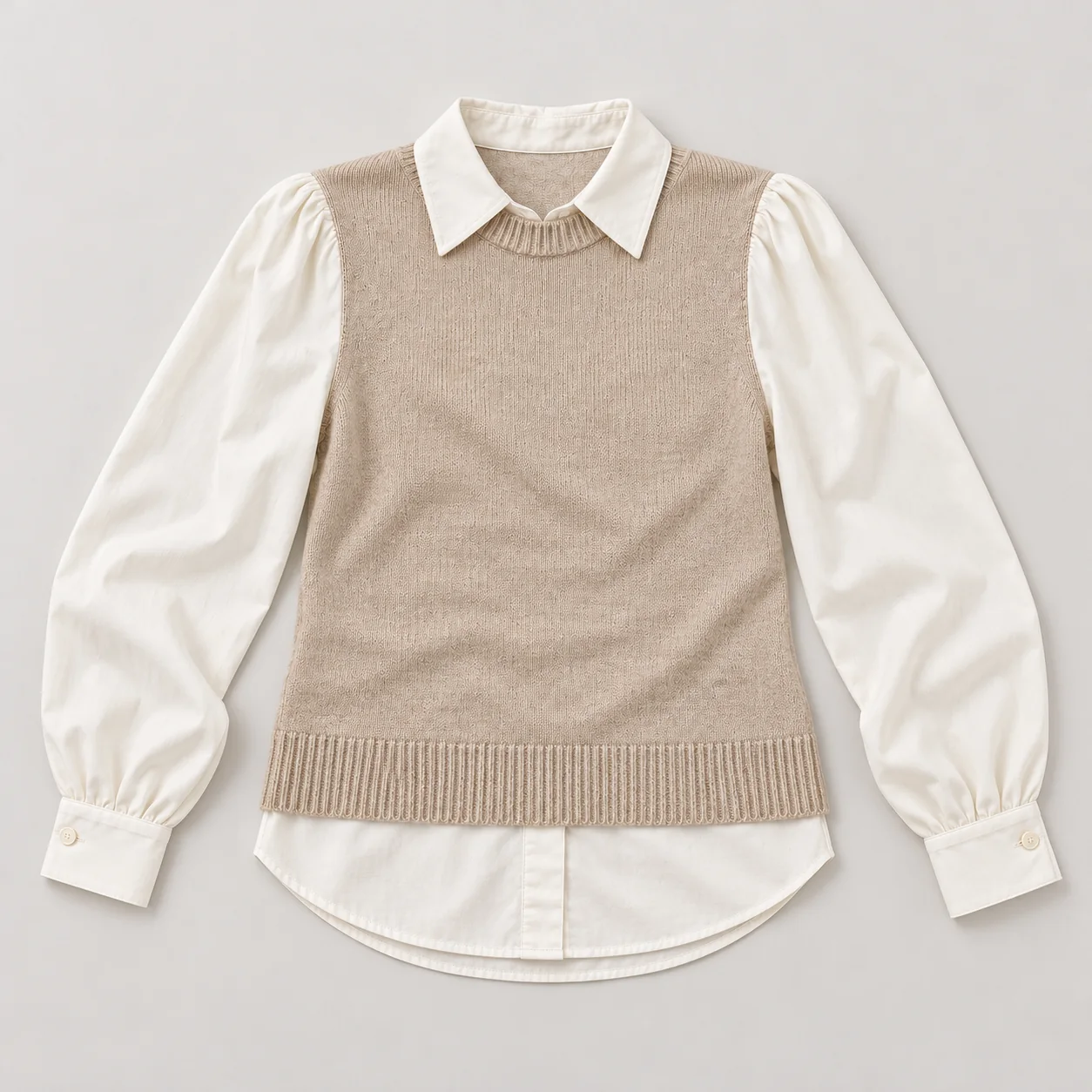
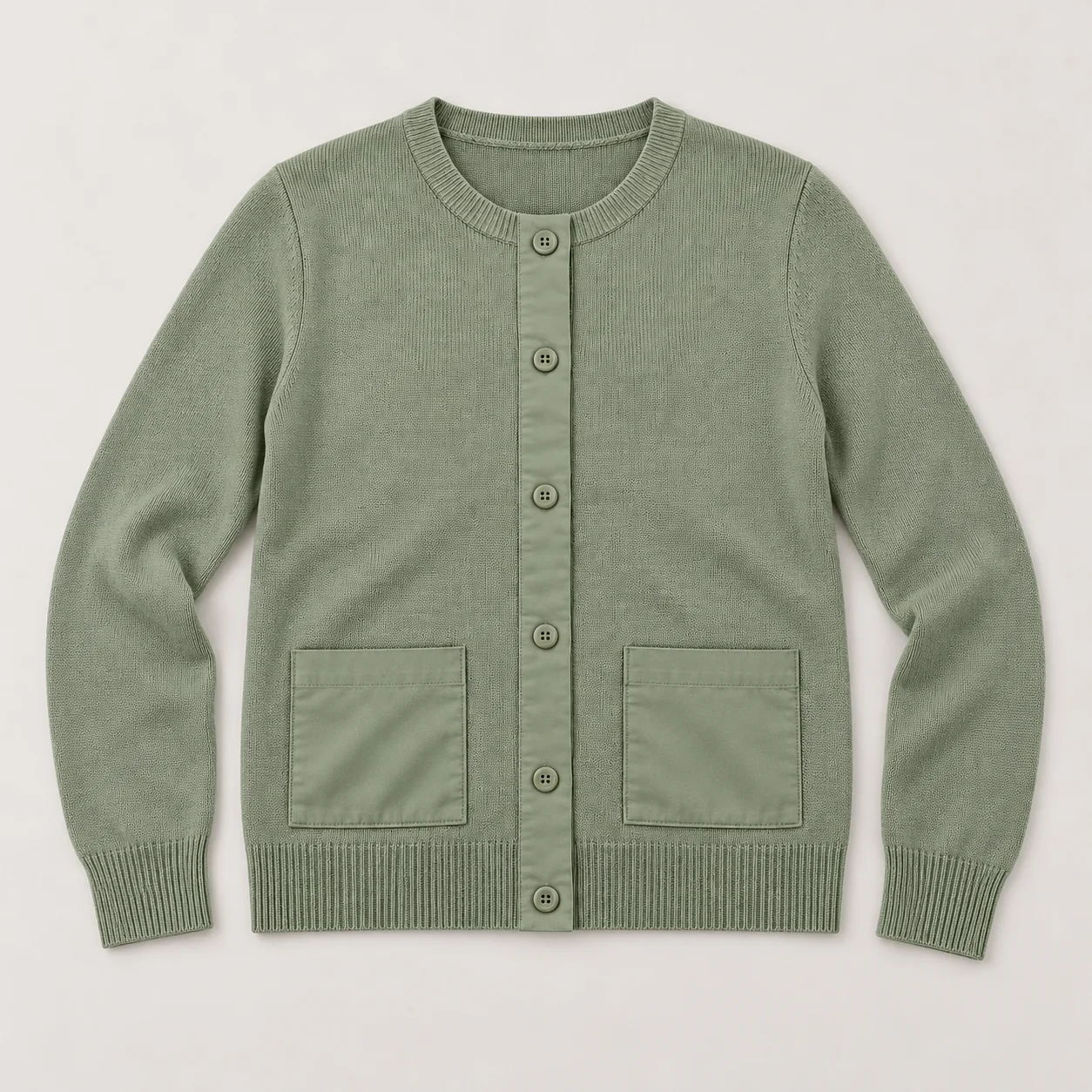
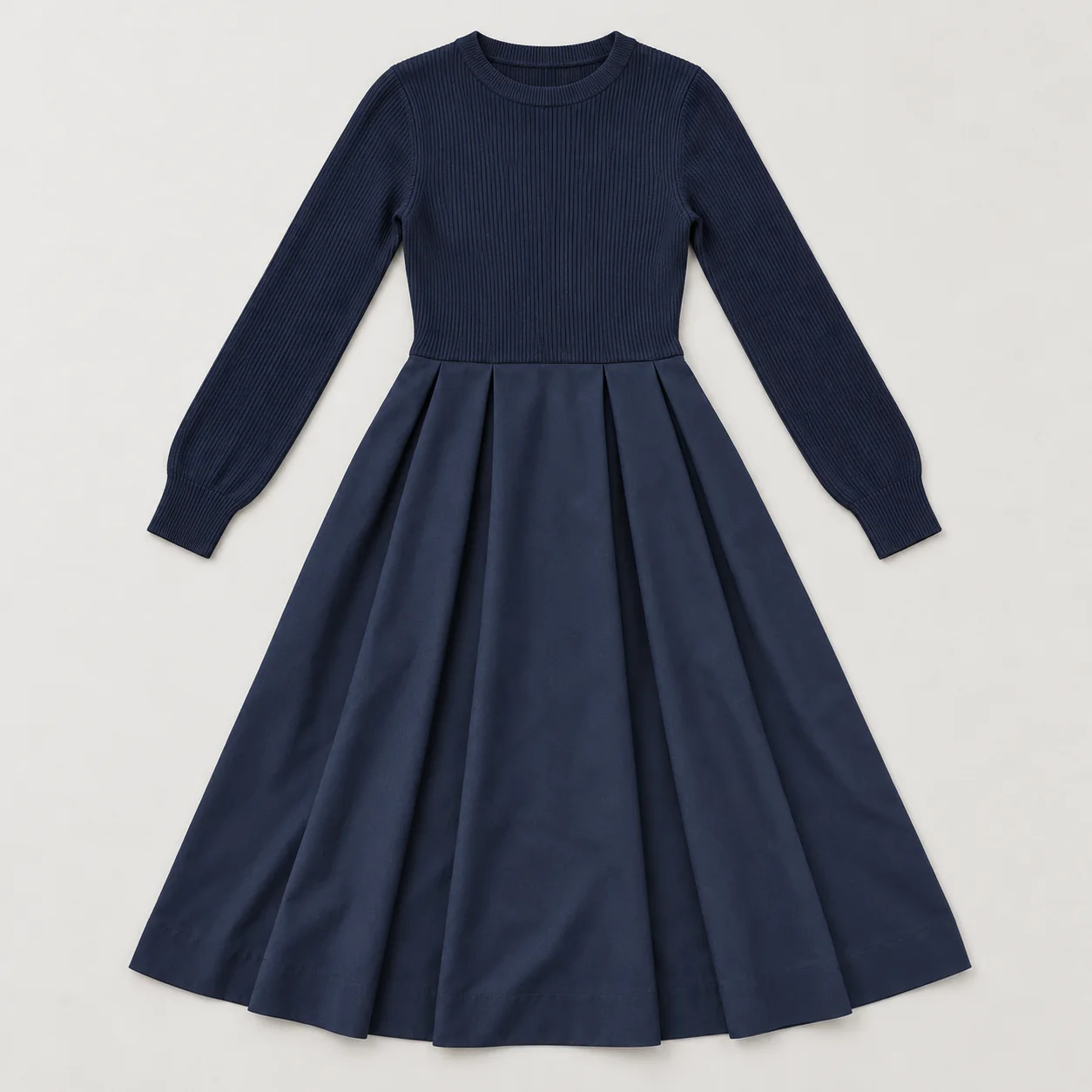
Can Huayang manufacture a sweater that combines flat-knit and woven components?
Yes. Huayang's sweater factory and woven workshop are fully self-operated. As confirmed in October 2026, the company has a 32-year history and 30 years of experience in knit-and-woven combination garments. Its technical department has more than 40 people, bringing technicians in knitted garments, woven garments and sweaters together for sampling and production guidance. Sweater-and-shirt combinations are a particular strength; our experience also covers woven pockets, shoulder and elbow patches, and uniform and workwear sweaters. Our teams coordinate the knitted and woven parts around the same specification. Confirm the materials, joining details and finished sample for your order.
Define the knit-and-woven construction
This page concerns flat-knit sweater components combined with woven fabric in one garment. A sweater-and-shirt combination can attach woven shirt elements, such as a collar, placket, sleeves or lower section, to the knitted component. A woven panel or insert forms part of the garment construction; an applied patch sits over the knitted body, for example at a shoulder or elbow. Mark the attached and separate parts clearly. A separate shirt worn under a sweater is a different product arrangement.
Mixed-media knitwear is a broader design description, and does not mean only this construction. Here the focus is knitted and woven garment components, rather than a blended yarn. A contrasting colour or texture alone does not identify the fabric structure.
Cut-and-sew describes a production method, not the name of this material combination. It may refer to jersey tops and can also be used within some sweater constructions. Identify the flat-knit and woven parts in your brief instead of relying on the method name alone.
One technical team across our sweater factory and woven workshop
Huayang directly operates both its sweater factory and woven workshop. Our technical department has more than 40 people, with technicians in knitted garments, woven garments and sweaters working in the same department. They coordinate the components during sampling and guide the production process, carrying the agreed materials, patterns, joining details and sample comments into production.
The fit between the parts needs attention from the start. A knitted component can respond to relaxation, finishing and handling differently from a woven cut piece. A woven pattern and a sweater measurement therefore need to be reviewed together, including the joining dimensions and the intended finished appearance. Separate measurements alone do not establish that the assembled garment will sit correctly.
Keeping these decisions within one technical department gives the buyer a coordinated specification and a clear point of responsibility for the complete garment. The team can resolve a mismatch between the knitted body and woven detail against the same sample and measurement record. When production stages are managed separately, the same decisions still require clear coordination and responsibility.
The woven workshop cuts and sews garment components; yarn and woven fabrics are selected and sourced for the order. Review the proposed fabric, finish, trims and any specialist work with the quotation. Our experience supports detailed development, while the agreed specification and finished sample define the approved construction for each order.
Knit-and-woven styles we manufacture
Huayang has experience producing the combinations below, with sweater-and-shirt styles a particular strength. Use them to describe your own design; the material combination, construction and sample requirements are reviewed for each new order.
- Sweater-and-shirt combinations: join flat-knit sections with woven shirt elements such as collars, plackets, sleeves, cuffs or lower sections. Show where the components attach and how the finished style should fit.
- Sweaters with woven pockets: define the pocket dimensions, position, opening, edge finish and attachment to the knitted body, including the inside appearance.
- Sweaters with woven shoulder or elbow patches: show the applied patch outline, position, edge treatment and its relationship to the knitted body and movement.
- Uniform and workwear sweaters: combine the knitted body with woven reinforcement or garment details, including ordinary police-uniform sweater styles. Define the required construction and any performance requirements for the order; protective certification and official supplier status are separate matters.
- Pullovers with a woven back, shoulder insert or side panel: identify the transition from the knitted body and its effect on balance and movement.
- Cardigans with woven fronts, sleeves or facings: show the opening, edge shape, fastening and how the two materials meet.
- Sweaters with woven collars, cuffs or hem inserts: define the attached detail, its dimensions and the intended shirt-and-sweater appearance.
What to include in your technical brief
Mark confirmed details and open development questions separately. Clear material and construction references are more useful than the phrase mixed media on its own. For a sweater-and-shirt style, show which shirt elements are attached to the knitted component, where they join and how the finished layers should sit.
- Front, back and detail drawings, with each knitted and woven component identified, the joining lines marked and attached shirt elements distinguished from separate garments.
- Yarn reference, composition and proposed knit construction; add the intended gauge or a finished swatch reference when available.
- Woven-fabric reference, composition, weight or thickness, finish, colour and pattern direction; identify the supplier reference if already selected.
- Panel, insert or patch dimensions, placement and proposed joining or edge finish. Identify details that are fixed and those requiring a proposal.
- Finished-garment measurement points, size range, grading information and the fit or movement to review.
- Intended care information, destination market, required material documents and any buyer test or inspection specification.
- Quantities by style, colour and size, quotation inclusions, requested dispatch or arrival date and an optional target purchase price.
Review the materials as a combination
Compare stretch and recovery, drape, thickness, surface and the intended finish of the proposed knit and woven materials. Similar fibre content or a matching colour does not establish that the two parts will behave alike. Record the exact references used in the sample, including any lining, support or trim that influences the joining area.
Review material alternatives with the garment design in view. A change that suits a separate fabric may alter the weight, movement or edge shape once attached to the sweater. Ask what sample or joining trial is needed before treating an alternative as approved.
Check shrinkage and growth at the joining areas
A knitted body and a woven panel may change dimensions differently during finishing or care. The result can affect panel balance, seam appearance, edge shape and fit. Look at the relationship between the two materials, rather than relying only on the overall garment length.
Agree the sample identity, measurement points and review conditions. Keep before-and-after length and width records for relevant components and the assembled garment, and inspect the adjoining edges. Distinguish factory washing and finishing from a separate home-laundering evaluation. Select any formal method and acceptance criteria for the actual materials and intended care; there is no single shrinkage limit for every combination.
Assess seam flatness, bulk and movement
Specify how the knitted edge and woven piece will be prepared and joined. Identify seam allowances and the intended inside finish. Review an actual joining sample for waving, puckering, stretching, inside bulk and the visible line between materials. Check how the area looks both laid flat and on the body, particularly where a panel meets an armhole, side seam, hem or front opening.
Agree the joining construction from the proposed materials and garment requirements. Thread, support, seam arrangement and sewing settings need to be considered together; a setting from another product is not an approval for this one. Keep the approved joining detail with the sample and specification.
Review the finished appearance and intended care
Inspect the complete sample after the proposed finishing and any agreed care evaluation. Compare front and back balance, panel edges, pocket or patch shape, closure alignment, hand feel and movement. Review each material and the junction between them; separate fabric results do not answer every question about the assembled garment.
If contrasting colours, printing or decorative components are proposed, agree any relevant review of colour transfer or staining between components. For material claims, identify the supporting documents for the order. Agree the care wording from the approved combination and applicable product information. Our independent department inspects every garment in every order to Japanese standards; specific test methods and acceptance criteria are agreed separately.
Keep one approval record for the complete garment
Agree the development scope with our technical team: which material references, joining trials, garment samples and sizes need review, who consolidates comments and who can approve the result. The knitted, woven and sweater technicians work together during sampling and guide production against the approved details. Keep the material references, measurement record, joining detail, care-review conditions, observations and open decisions with the same sample version.
A change of yarn, woven fabric, finish, panel dimensions or joining detail can affect the combination. Review the effect on fit, appearance, quotation and timing before updating the approved specification. Identify which approval remains valid and what must be checked again.
Confirm quantity, costs and timing for the actual brief
State the quantity split for the sweater style and each woven-fabric colour or reference. Yarn conditions, fabric availability, cutting requirements, trims and sample work can affect the proposal. Ask what minimum basis applies to the actual combination; a range total alone does not establish feasibility for every style or fabric.
Compare quotations on the same finished specification, quantity split, labels, packing and delivery basis. Identify the sample scope, material approvals and other start conditions behind the proposed schedule. MOQ, cost and lead time are confirmed for the order.
Technical references for your review
The public references below explain dimensional-change and appearance-review topics. They are background for the buyer questions on this page, not test reports for Huayang garments. Agree suitable methods, conditions and acceptance criteria for the proposed product. Full paid methods have not been reproduced.
State the construction in your enquiry
Prepare a knit-and-woven enquiry
Use this outline with your own design. Leave unknowns marked for development; it is not a stock offer or a production commitment.
- Style and specification version: attach front, back and joining-detail drawings.
- Knitted component: yarn, construction, swatch or quality reference, and details still open.
- Woven component: fabric reference, finish, colour and dimensions or placement.
- Finished garment: size range, measurement points, fit and movement priorities.
- Review scope: joining trial, sample sizes, finishing or care checks, required records and approval contact.
- Commercial brief: quantity split, target price, labels and packing, destination and requested date basis.
Questions buyers ask
Do you operate both the sweater factory and the woven workshop?+
Yes. Both are fully self-operated by Huayang. Our technical department has more than 40 people, including technicians in knitted garments, woven garments and sweaters. They work together during sampling and guide production, coordinating the components against the same specification and approved sample.
Do you have experience making sweater-and-shirt combinations?+
Yes. These are a particular strength within our 30 years of knit-and-woven combination experience. We develop the knitted component and woven shirt elements together, including their joining dimensions, fit and finished appearance. Mark the attached collars, plackets, sleeves, cuffs or lower sections in your brief so the technical team can review the complete construction.
Does a woven workshop mean Huayang weaves all the fabric?+
Our woven workshop concerns garment cutting, sewing and assembly. Yarn and woven fabrics are selected and sourced for the order. Share the fabric or supplier reference you want to use, and review availability, material documentation and suitability with the proposal.
Can we develop woven shoulder or elbow patches on a knitted sweater?+
Yes. We have experience producing sweaters with woven shoulder and elbow patches, as well as woven pockets and other joined details. Share drawings or a reference showing the material, outline, position and attachment detail. Review the woven detail and knitted body together for movement, edge appearance, thickness and their response to the proposed finishing and care. The sample and agreed specification define the approved construction.
Can you make uniform and workwear sweaters with woven details?+
We have experience with uniform and workwear sweaters, including ordinary police-uniform styles with woven details. Share the garment specification, intended use, material requirements and any required performance criteria. Manufacturing experience alone does not establish protective certification or official supplier status; any such requirements need separate review and documentation.
Is this the same as cut-and-sew knitwear?+
Cut-and-sew is a production method that may be used with different knitted fabrics or sweater components. This page addresses the combination of flat-knit sweater components and woven fabric panels or applied details. Name the materials and joining construction in your enquiry so the required manufacturing route can be reviewed.
Can development start from a sketch or reference garment?+
Share the sketch, reference and the details that must remain. Identify the knitted and woven areas, placement, fit intention and open material choices. Agree the development work, sample scope and approvals before treating the design as ready for production.
Will the knitted and woven parts shrink by the same amount?+
Do not assume identical behaviour from a fibre name alone. Review the actual material combination and assembled sample under agreed conditions, with relevant measurement points and seam appearance recorded. Acceptance criteria and any formal method are agreed for the product.
What are the MOQ and sample lead time?+
Minimum quantities, sample lead time and the proposed production schedule depend on the actual style, yarn, woven-fabric references, colour and size split, development scope and material readiness. Send your brief and requested date basis so these conditions can be reviewed together. There is no fixed website commitment.
Can we add our brand labels and packing?+
Include label artwork, positions, care-information requirements and packing instructions in the brief. Confirm supplied or sourced components and quotation inclusions, and approve the retail details with the finished garment sample.